

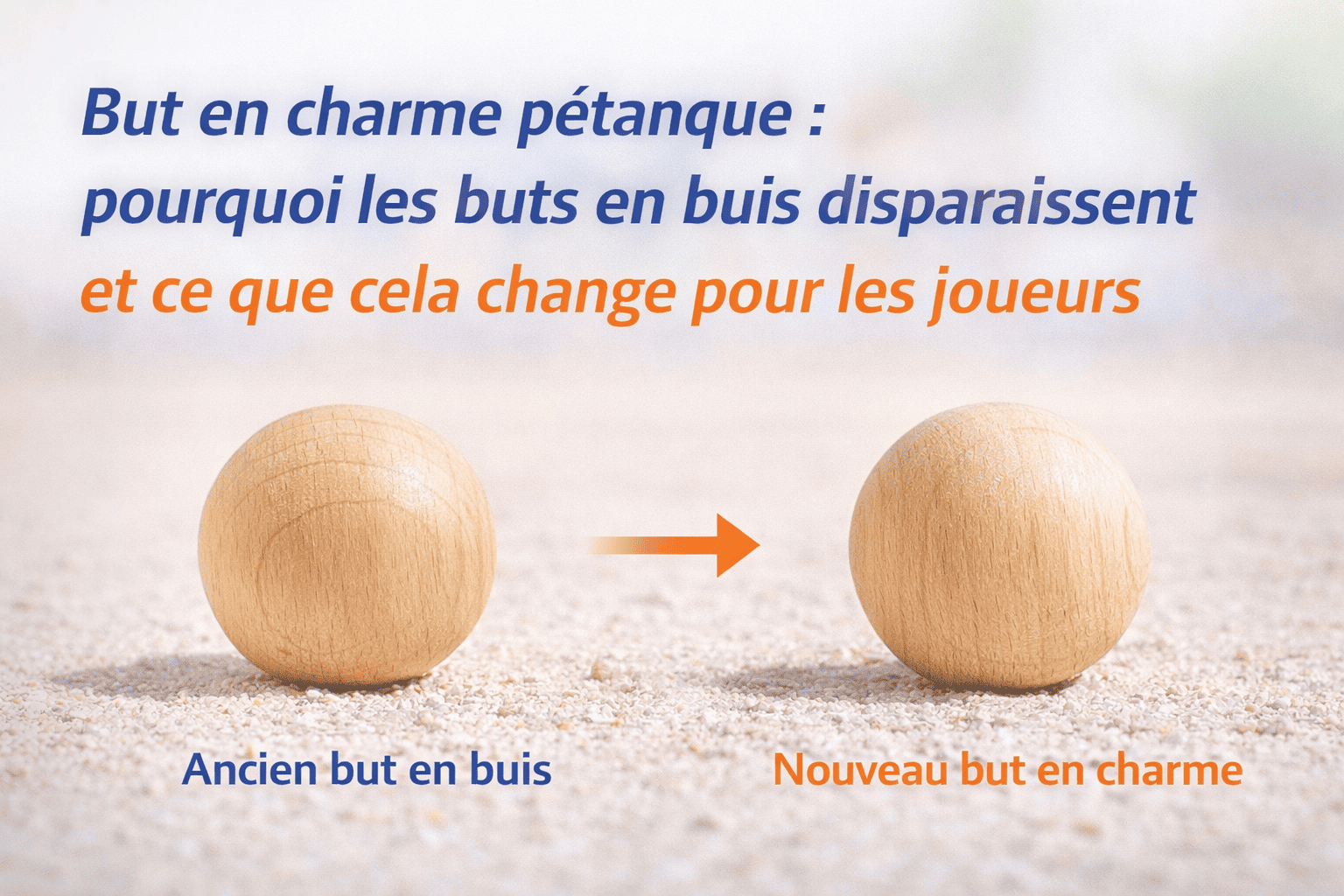
À la pétanque, chaque détail compte. Si les boules concentrent souvent l’attention, le cochonnet de pétanque, aussi appelé but, reste l’élément central de chaque mène. Depuis quelques années, un changement important s’opère sur les terrains : l’arrêt progressif du but en buis pétanque, remplacé par une nouvelle référence, le but en charme.
Cette évolution, confirmée notamment par La Tournerie Monneret, fabricant historique et acteur majeur du cochonnet en France, soulève de nombreuses questions chez les joueurs. Pourquoi le buis disparaît-il ? Pourquoi le but en charme s’impose-t-il aujourd’hui ? Et quel est l’impact réel sur le jeu ? Voici une analyse claire et factuelle pour comprendre cette transition.
Pourquoi la fabrication des buts en buis s’arrête
Pendant des décennies, le but en buis a été la référence absolue des terrains de pétanque. Dense, lourd et extrêmement résistant, il offrait une stabilité remarquable face aux chocs répétés des boules. La Tournerie Monneret, référence incontournable dans la fabrication de cochonnets, a longtemps travaillé cette essence exigeante.
Mais aujourd’hui, le constat est sans appel, le buis exploitable a quasiment disparu. Trouver du bois suffisamment dense, homogène et apte à produire un cochonnet de 30 mm réglementaires est devenu impossible à grande échelle. Cette raréfaction est structurelle. Elle s’explique par la croissance très lente du buis, les maladies qui l’affectent et des contraintes environnementales de plus en plus strictes.
L’arrêt du but en buis pour la pétanque ne résulte donc pas d’une simple rupture d’approvisionnement. La Tournerie Monneret a fait un choix clair : préserver la qualité plutôt que maintenir une production dégradée. Produire des cochonnets susceptibles de se fissurer ou de perdre leur intégrité n’était pas envisageable. L’entreprise a donc préféré arrêter définitivement le buis afin de garantir la sécurité, la fiabilité et la constance du matériel utilisé par les pétanqueurs.
But en charme : la nouvelle référence choisie par La Tournerie Monneret
Face à la disparition du buis, La Tournerie Monneret n’a pas opté pour une solution de remplacement par défaut. Le choix du but en charme repose sur des critères techniques précis. Le charme est un bois dur, homogène et stable. Il présente une excellente résistance aux impacts et conserve ses propriétés mécaniques dans le temps. Ces qualités en font une essence parfaitement adaptée à la fabrication de cochonnets de pétanque.
Contrairement à certaines idées reçues, la transition vers le but en charme pétanque ne s’est pas faite dans l’urgence. La Tournerie Monneret a anticipé cette évolution dès 2020, en lançant une production progressive et un stockage de longue durée. Le bois de charme nécessite un séchage long et rigoureux. Cette phase est essentielle pour éviter toute déformation et garantir un comportement régulier sur le terrain. Grâce à plusieurs années de recul, la qualité est aujourd’hui parfaitement maîtrisée.
Comparatif but en buis vs but en charme
Avant de choisir entre un but en buis et un but en charme, il est important de comprendre ce qui change réellement… et ce qui ne change pas. Car contrairement à certaines idées reçues, la différence ne concerne pas la réglementation, mais uniquement la nature du bois.
Sur le plan réglementaire, aucune différence :
- Diamètre : 30 mm dans les deux cas
- Homologation : conforme aux règles FFPJP et FIPJP
La différence principale concerne le poids :
- But en buis : environ 15 g
- But en charme : environ 11 g
Autrement dit, que vous utilisiez un but en charme ou un but en buis, vous êtes parfaitement dans les règles en compétition comme en loisir. Il n’existe aucune distinction réglementaire entre les deux matériaux. Cette variation s’explique par la densité naturelle du bois, sans remettre en cause la conformité du produit.
Comportement du but en charme sur le terrain
En situation de jeu, le but en charme présente une inertie légèrement plus faible. Il peut donc se déplacer un peu plus facilement lors d’un impact direct. Cette réaction est normale sur le plan physique et ne traduit en aucun cas une fragilité. Après quelques mènes, la majorité des joueurs ajustent naturellement leur dosage. Le jeu reste lisible, précis et cohérent.
Le but en charme est-il autorisé en compétition officielle ?
Oui, sans aucune ambiguïté. Le but en charme homologué respecte toutes les normes imposées par la Fédération Française et Internationale de Pétanque. Il est autorisé dans toutes les compétitions officielles, concours et championnats. La Tournerie Monneret propose exclusivement des cochonnets conformes, répondant strictement aux exigences réglementaires.
Quel impact du but en charme sur le jeu des pétanqueurs ?
Pour les pointeurs
La précision reste identique. Le but en charme pétanque demande simplement une meilleure anticipation lors des contacts appuyés.
Pour les tireurs
Le déplacement du but nécessite parfois moins de puissance. Cette caractéristique peut devenir un avantage tactique, notamment sur terrains rapides.
Pour les joueurs polyvalents
La vivacité du but en charme dynamise certaines mènes et renforce l’importance de la lecture du jeu.
Comment bien s’adapter au but en charme
L’adaptation est rapide. Tester le cochonnet en charme lors de parties d’entraînement permet d’intégrer rapidement ses réactions. Inutile de modifier sa gestuelle : les automatismes reviennent naturellement après quelques mènes.
Disponibilité des buts en charme aujourd’hui
Grâce à l’anticipation de La Tournerie Monneret, l’approvisionnement en but en charme reste stable pour les joueurs réguliers et les clubs. La production est volontairement maîtrisée afin de garantir une qualité constante du bois utilisé. Cette approche privilégie l’excellence plutôt que le volume.
L’avenir du but de pétanque
L’arrêt du but en buis pétanque marque une évolution importante, mais cohérente. En s’appuyant sur le charme, La Tournerie Monneret illustre la capacité de la pétanque à évoluer sans renier ses fondamentaux. Le but en charme s’impose aujourd’hui comme une solution durable, fiable et responsable.
La disparition du but en buis n’est ni une contrainte ni une régression. Le but en charme représente une alternative performante, homologuée et éprouvée sur le terrain. Après un court temps d’adaptation, les sensations, la précision et le plaisir de jeu restent intacts. La pétanque continue d’évoluer, fidèle à son esprit.